

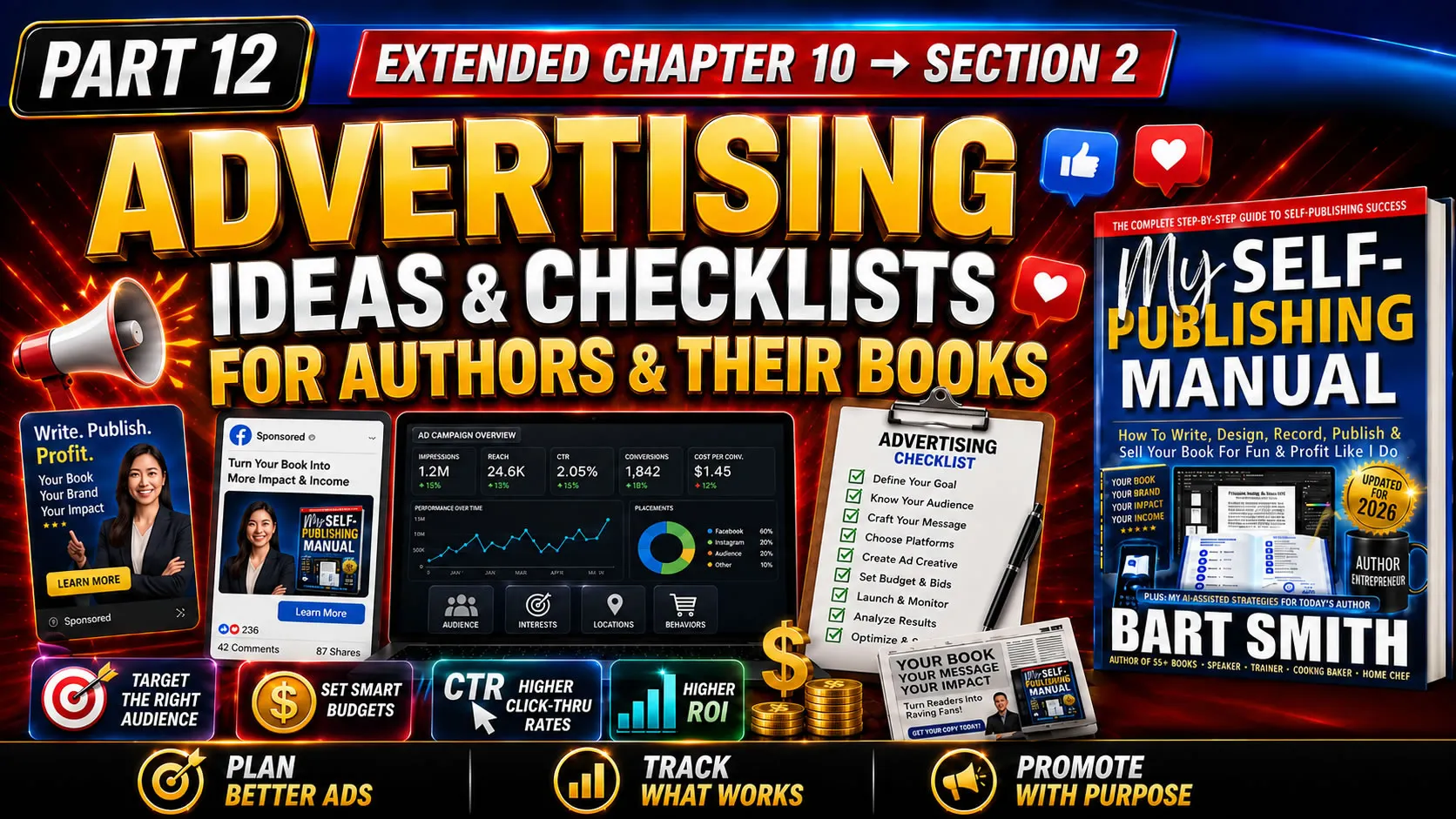
SECTION 2 → PART 12
Advertising Ideas & Checklists For Authors & Their Books
EXTENDED BOOK CHAPTER #10 from MY SELF-PUBLISHING MANUAL by Bart Smith
INTRODUCTION & WHAT TO DO
Use this checklist to make sure your book advertising campaigns are planned wisely, aimed at the right audience, and tracked for results.
Advertising can help you sell more books, grow your email list, promote your author brand, fill events, and generate visibility for your work — but only when it is targeted properly and monitored carefully.
Whether you are advertising a paperback, eBook, audiobook, book signing, seminar, free chapter, or author website, the following checklist will help you run smarter and more profitable campaigns.
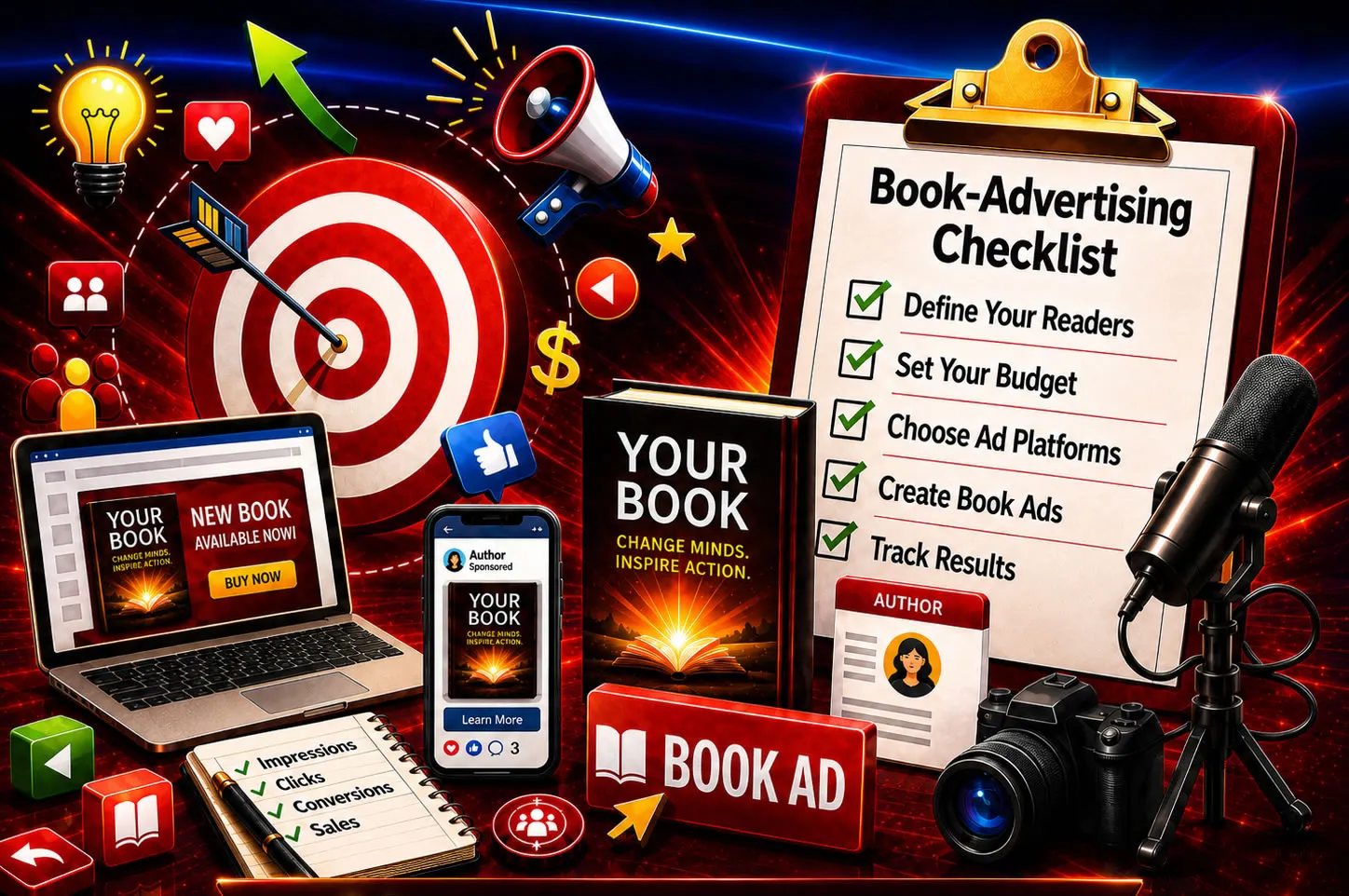
AUTHOR/BOOK ADVERTISING CHECKLIST
1. Define who your ideal book buyer is ...
Before spending money on ads, get clear on exactly who your book is for. Identify the type of reader most likely to buy, enjoy, and benefit from your book.
2. Know where your readers already gather ...
Determine where your audience spends time online and offline. This might include Facebook groups, YouTube channels, podcasts, blogs, newsletters, magazines, local events, bookstores, or niche communities related to your book’s topic.
3. Choose what exactly you are advertising ...
Decide whether the ad will promote your physical book, Kindle eBook, audiobook, free excerpt page, lead-generation page, seminar, book signing, coaching offer, or another related offer.
4. Set a clear goal for the campaign ...
Every ad should have one main objective. That objective might be to sell books, collect leads, grow your email list, drive traffic to your website, promote an event, or increase visibility for your author brand.
5. Research advertising platforms and media options ...
Compare ad opportunities before spending money. Look at audience fit, pricing, impressions, readership, click potential, and whether the platform matches your type of book and ideal customer.
6. Create a realistic advertising budget ...
Decide how much money you can afford to spend testing your ads. Start small ($50-$250 per month), gather feedback, and increase your budget only after you see signs that something is working.
7. Prepare the page your ad will send people to ...
Do not run ads to a weak or unfinished page. Make sure your book sales page, opt-in page, event page, or landing page looks professional, explains the offer clearly, and makes it easy for visitors to take action.
8. Make sure your systems are ready for incoming traffic ...
If your ad works, people will click, browse, opt in, or buy. Be sure your forms, buy buttons, email automation, book links, payment options, and follow-up systems are ready to handle responses.
9. Write a strong headline that speaks to the reader ...
Your ad headline should grab attention quickly and make the right people stop and look. Focus on the benefit, problem solved, promise made, or curiosity created by your book.
10. Highlight the value of the book clearly ...
Show readers why your book matters. Tell them what they will learn, gain, avoid, improve, understand, or walk away with after reading it.
11. Use a compelling image or visual ...
Your book cover, mockup, author photo, event image, or promotional graphic should support the message of the ad and help make the advertisement more eye-catching and memorable.
12. Include a strong call-to-action ...
Tell people exactly what you want them to do next. Examples include: buy the book, download a free chapter, watch the video, register for the seminar, join the email list, or visit your book page.
13. Study successful book advertisements for inspiration ...
Look at ads for books, courses, workshops, and similar offers in your niche. Pay attention to the headlines, images, offers, layouts, and calls-to-action that seem to pull attention.
14. Choose the best ad size, format, and placement ...
Decide whether your ad will be a banner ad, social media ad, flyer, postcard, print ad, newsletter sponsorship, video ad, or another format. Match the format to the audience and the goal.
15. Promote an offer, not just the book ...
Sometimes people need a reason to respond now. Consider offering a free excerpt, bonus, event invitation, audio sample, checklist, or special package to increase response.
16. Decide whether to design the ad yourself or hire help ...
If you create the ad yourself, keep it clear and professional. If you hire a designer, give clear instructions so the final ad fits your book, audience, and intended outcome.
17. Proofread everything carefully ...
Check spelling, grammar, author name, book title, URLs, QR codes, dates, phone numbers, and buy links. A small mistake in an ad can cost you money and credibility.
18. Allow enough lead time if using print or event-based advertising ...
If the ad is tied to a magazine, local paper, postcard campaign, seminar, or book signing, make sure you account for design, approval, print, and placement deadlines.
19. Review the ad once it goes live ...
Confirm that your ad appears correctly, links to the right page, displays properly on desktop and mobile, and presents the offer the way you intended.
20. Track the results of every campaign ...
Measure what happened. Track clicks, leads, email sign-ups, book sales, event registrations, page visits, or calls so you know whether the ad actually performed.
21. Test different versions of your ad ...
Try different headlines, images, offers, landing pages, and calls-to-action. Small changes can make a big difference in how many people respond.
22. Record where the ad ran and what it cost ...
Keep notes on each campaign including platform, date, price, duration, audience, ad version, and response. This helps you avoid guessing later.
23. Measure return on investment ...
Determine whether the campaign was worth the money. Look at how much you spent versus the number of books sold, leads generated, or opportunities created.
24. Keep improving your advertising approach ...
Use what you learn from one campaign to make the next one better. The authors who advertise best over time are the ones who test, learn, adjust, and keep going.
PRO TIP → Don’t think of advertising as a one-time gamble. Think of it as an ongoing testing process where you learn what message, offer, audience, and platform help you sell more books, build your author brand, and create more opportunities over time.
CHECK OUT OTHER BOOK MARKETING LESSONS
← PREVIOUS LESSON (PART 11)
MAIN BOOK MARKETING HUB
NEXT LESSON (PART 13) →

© BartSmith.com | All Rights Reserved
Website Design & Marketing by Bart Smith